
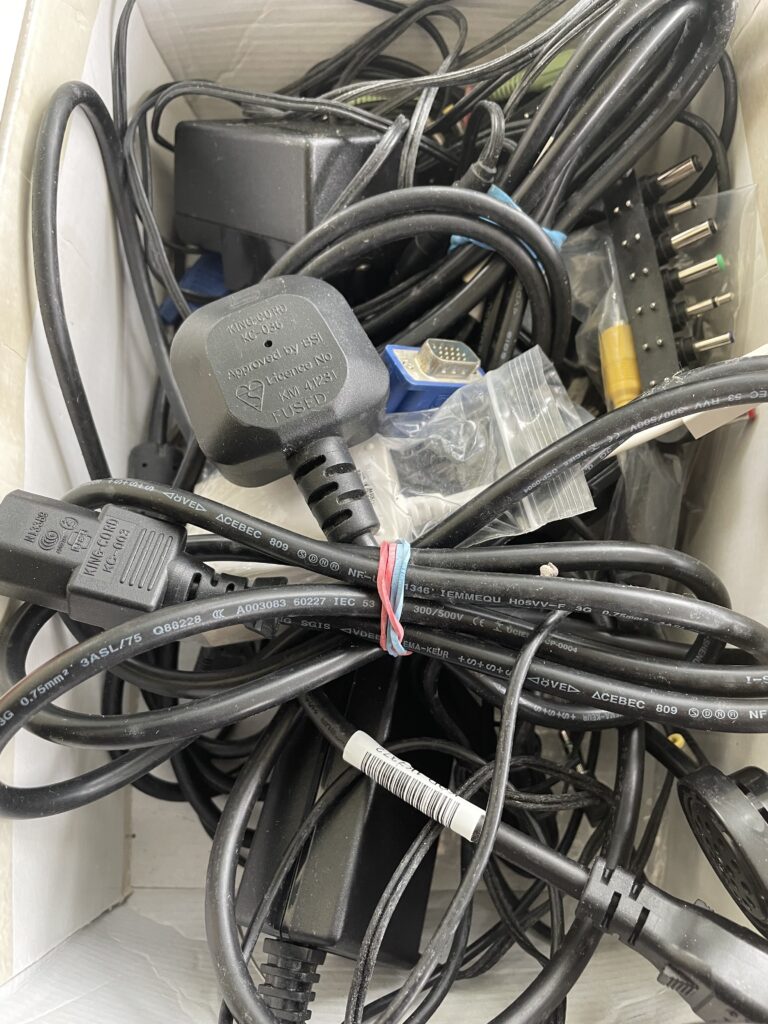
A little bit about e-waste electrical or electronic waste or WEEE – waste electrical and electronic equipment.
E-waste is a generic term that includes anything with plugs, cords, electronic components and batteries. Common sources of e-waste include televisions, computers, mobile phones and any type of home appliance, from toasters and kettles to air conditioners and children’s toys. Lighting and electric tools are also included. It Is one of the fastest growing waste streams in the UK. Globally we produce 50 million tonnes each year. (UN Environment programme).
E-waste is not biodegradable and can last anything from 50 to 1 million years. The lack of recycling is an indictment on the global electronics industry. As time goes on the issue is escalating. Currently, recycling some types of e-waste and recovering materials and metals is an expensive process. Whilst items are degrading in landfill heavy metals like mercury, cadmium, lead, barium and lithium are leaching into the soil and waterways at a cost to human health and biodiversity. Toxins affect the brain, heart, liver, kidney and also cause skeletal system damage. Therefore it is very important that electronic goods are disposed of responsibly.
What happens to recycled e-waste?
Items are broken down and materials are transformed into reuseable raw materials via melting, shredding and refining. This helps to conserve valuable resources, metals like gold, silver, aluminium, palladium, copper, tin, iron, aluminium and nickel. Also lead and rare earth elements like lithium and cobalt. The process also saves money whilst potentially creating new jobs and business opportunities and in this way becomes part of the circular economy – a sustainable process.
How do I reduce my e-waste?
Top ways to reduce e-waste
- Know a product’s lifespan before you buy it.
- Set a limit on electronic gadgets.
- Check the packaging for an environmental seal.
- Spread the word about e-waste.
- Learn about electronic components.
- Make recycling a part of your lifestyle, learn where to take your electrical items to be recycled.
How to recycle mobile phones, computers and other electronics
- Postpone upgrading your devices for a new one as long as you can. Think twice about getting your phone or other devices upgraded.
- Find opportunities for reuse.
- Try returning the item to the manufacturer, after all they produced the item and profited from the sale.
- Take them to a dedicated e-waste recycling facility.
- Some charities accept old mobile phones, lap tops, i pads etc.
Disposing of waste is an area where we need to think carefully about what the future impact will be on the present and future citizens of the world. By tapping into the hundreds of ways in which we can reduce, reuse and recycle we help other people.